
Liquid BioCell Collagen is Clinically Proven for Benefits with Joints, Discomfort, Skin & Connective Tissue.
Liquid BioCell Collagen® is a hydrolyzed chicken sternal cartilage extract naturally containing collagen type II, chondroitin sulfate, and hyaluronic acid. Only sternal cartilage is used in BioCell and this is key.
Liquid BioCell is shown to increase all types of collagen including the main 3 collagens found in the human body – type I, type II and type III collagen. This is achieved by stimulating collagen synthesis and preventing collagen breakdown through hylaluronidase.
Liquid BioCell is bio-identical to human collagen and bio-active in the human body.
With 7 Global patents and backed by multiple clinical trials, preclinical studies and expert reviews – Liquid BioCell Collagen supports healthier joints, less discomfort and stronger connective tissue.
A powerful tool to offer to your patients for increased results.
Benefits include:
- Joint Mobility and Flexibility
- Improve Joint Comfort.
- Quicker Recovery Time Injuries.
- Cartilage Repair.
- Connective Tissue Repair.
- Wrinkle Reduction.
- Skin Hydration.
- Healthier Hair & Nails
Joint & Cartilage Support
- Reduces joint pain and stiffness
- Supports cartilage integrity and joint mobility
- Improves functional activity in osteoarthritis patients
- Promotes comfort during daily movement
Connective Tissue & Muscle Recovery
- Enhances recovery after intense exercise
- Reduces muscle damage markers (CK, LDH, CRP)
- Supports tendons, ligaments, and overall musculoskeletal health
- Improves performance and adaptive response to training
Skin Health & Anti-Aging
- Reduces facial lines, fine lines, and crow’s feet
- Improves skin elasticity, firmness, and hydration
- Boosts collagen and elastin production in the dermis
- Protects against UV-induced photoaging
- Supports a radiant, youthful appearance
Additional Benefits
- Enhances antioxidant defense in skin
- Supports wound healing and tissue regeneration
- Combines effectively with hyaluronic acid and other biopolymers for cosmetic applications
- Scientifically backed and well tolerated in all studies

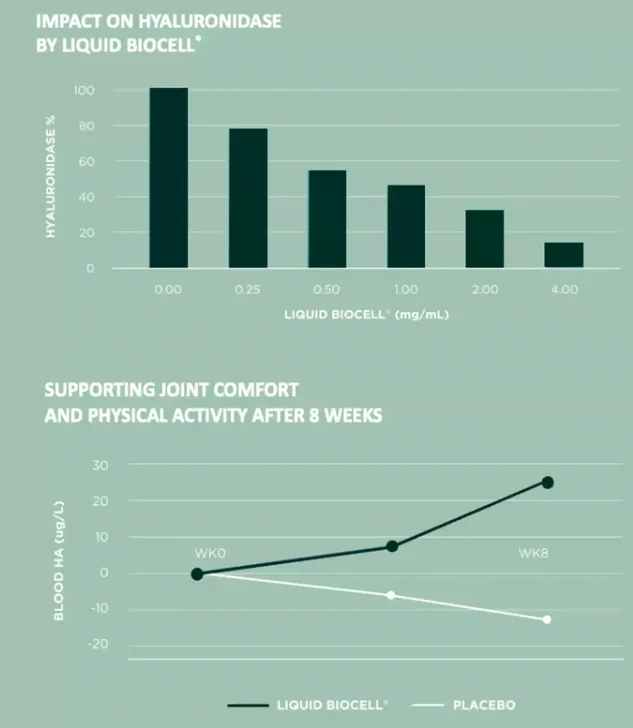
Alleviating Joint Pain.
Anaam Mohammed. et al. https://pmc.ncbi.nlm.nih.gov/articles/PMC8308696/
Summary:
This randomized, double-blind, placebo-controlled clinical trial evaluated the effects of hydrolyzed chicken collagen type II (HCII) the same type of collagen matrix found in Liquid BioCell Collagen® on joint discomfort, stiffness, and mobility in adults aged 40–65 experiencing joint pain, everyday and found significant improvements in joint comfort and mobility.
Methods:
For 8 weeks, 90 participants received either:
Hydrolyzed chicken collagen type II (HCII)
Placebo
Researchers measured:
Joint pain, Stiffness, Physical function, Mobility using WOMAC and VAS assessments.
Results:
Participants taking hydrolyzed chicken collagen type II experienced significant improvements in joint comfort and mobility compared with placebo.
Key Findings: Participants reported better movement and reduced discomfort during daily activities.
36.9% reduction in overall WOMAC joint discomfort score
Significant improvements in:
Joint stiffness
Mobility
Physical function
Everyday movement comfort.
These findings suggest hydrolyzed chicken collagen type II, like that in Liquid BioCell help reduce joint discomfort, improve mobility and flexibility, support healthy cartilage and connective tissue, promote active aging and movement comfort.
Conclusion:
Researchers concluded that daily HCII supplementation significantly improved joint comfort, stiffness, and physical function compared with placebo, demonstrating strong potential for supporting long-term joint health and mobility.
Reference:
Anaam Mohammed. et al. A Double-Blind, Randomized, Placebo-Controlled Trial to Evaluate the Efficacy of a Hydrolyzed Chicken Collagen Type II Supplement in Alleviating Joint Discomfort.
Improving Osteoarthritis.
Effect of the Novel BioCell Collagen, on Improving Osteoarthritis-Related Symptoms:
A Randomized, Double-Blind, Placebo-Controlled Trial
Summary:
Osteoarthritis is a major cause of pain and disability among older adults. Current medical and surgical treatments can be costly and carry the risk of serious side effects. A clinical study was conducted to evaluate whether BioCell Collagen supplementation could help reduce joint pain and support cartilage health.
This randomized, double-blind, placebo-controlled trial assessed the tolerability and effectiveness of BioCell Collagen, a low molecular weight dietary supplement derived from hydrolyzed chicken sternal cartilage.
The study enrolled 80 patients with physician-confirmed osteoarthritis in the hip or knee. All participants had experienced joint pain for at least three months prior to enrollment, with baseline pain levels of 4 or higher on the Physician Global Assessment scale. For 70 days, participants were randomly assigned to receive either 2 g of BioCell Collagen daily or a placebo.
Results:
Analysis of the intention-to-treat population showed that the BioCell Collagen group experienced significant improvements compared to placebo:
Joint pain reduction: Significant decrease by day 70 (p < 0.001)
WOMAC scores (pain, stiffness, and function): Significant improvement on days 35 (p = 0.017) and 70 (p < 0.001)
Physical activity levels: Significant improvement on days 35 (p = 0.007) and 70 (p < 0.001)
Overall pain levels: Notably reduced compared to placebo
These findings suggest that BioCell Collagen can serve as a valuable adjunct therapy for managing osteoarthritis symptoms alongside conventional treatments.
Reference:
Schauss, A. G. Effect of the Novel Low Molecular Weight Hydrolyzed Chicken Sternal Cartilage Extract, BioCell Collagen, on Improving Osteoarthritis-Related Symptoms: A Randomized, Double-Blind, Placebo-Controlled Trial.
Connective Tissue Repair.
Effects of BioCell Collagen, a Novel Cartilage Extract, on Connective Tissue Support and Functional Recovery From Exercise
https://pubmed.ncbi.nlm.nih.gov/26770145/
Summary:
This study investigated the potential effects of a novel hydrolyzed chicken sternal cartilage extract, BioCell Collagen, on biomarkers and functional recovery following intense exercise.
Methods:
A randomized, double-blind, placebo-controlled pilot study enrolled 8 healthy, recreationally active participants (6 males, 2 females) aged 18–55. Participants in both groups had similar fitness levels and physical activity, as measured by the Yale Physical Activity Score. All participants completed the study per protocol.
Results:
Preliminary findings suggest that BioCell Collagen may support connective tissue protection and enhance recovery in individuals engaged in resistance and cardiovascular training. Key outcomes include:
Muscle tissue damage markers:
Creatine kinase (CK): +20 U/L (intervention) vs +4726 U/L (placebo)
Lactate dehydrogenase (LDH): –3.5 U/L (intervention) vs +82.9 U/L (placebo)
C-reactive protein (CRP): +0.07 mg/L (intervention) vs +0.7 mg/L (placebo)
Performance recovery:
Bench press repetitions to failure decreased 57.9% (day 43) and 57.8% (day 46) in the intervention group vs 72.2% and 65% in the placebo group, indicating improved muscular recovery.
The overall trends in performance and perceived recovery scores suggest that BioCell Collagen may enhance muscle recovery and adaptive responses to exercise. The supplement was well tolerated with no adverse effects reported.
Reference:
Lopez, H. L. Evaluation of the Effects of BioCell Collagen, a Novel Cartilage Extract, on Connective Tissue Support and Functional Recovery From Exercise.
Reduced Joint Pain.
Pilot study on BioCell Collagen for joint comfort
Summary:
This pilot study evaluated the effects of BioCell Collagen supplementation on joint comfort and overall physical function. The research aimed to assess both efficacy and safety in a small group of healthy adults experiencing mild joint discomfort.
Methods:
Sixteen participants were enrolled and evenly divided into two groups. One group consumed 1 g of BioCell Collagen twice daily (2 g total), while the other received a placebo, over a period of 8 weeks. The study was conducted in a randomized, double-blind manner to ensure objectivity, and no adverse events were reported.
Results:
Joint comfort: Participants in the BioCell Collagen group showed 40% greater improvement in subjective joint comfort compared to the placebo group.
Safety: The supplement was well tolerated, with no reported side effects.
Physical function: Improved perceived mobility and joint ease, supporting BioCell Collagen as a safe and effective intervention for enhancing daily joint comfort.
This early clinical pilot study provides additional evidence that BioCell Collagen can support joint health, mobility, and overall quality of life, reinforcing findings from larger, later clinical trials.
Reference:
2004 Pilot Study – BioCell Collagen for Joint Comfort. Presented at the Experimental Biology International Conference, Washington, D.C.
Pilot research presented at Experimental Biology demonstrated improvements in joint comfort and mobility with BioCell Collagen supplementation. These findings were later supported by published clinical trials showing significant reductions in joint pain and improved physical function.
Published study: https://pubmed.ncbi.nlm.nih.gov/18416885/
Reduced pain.
Study on BioCell Supplement for Subjective Pain
Summary:
This prospective, crossover, double-blind clinical trial evaluated the effects of BioCell Collagen supplementation on subjective discomfort and overall joint or tissue-related pain in adults. The study aimed to determine whether regular intake of BioCell Collagen could provide relief from various types of discomfort while maintaining safety and tolerability.
Methods:
A total of 89 participants were enrolled in the study. Subjects received 2 g of BioCell Collagen daily for a period of three months, while a placebo group was included for comparison. The study employed a crossover design to assess differences in perceived discomfort and pain between the BioCell Collagen and placebo phases. No adverse events or safety concerns were reported.
Results:
Pain relief: Within 45 days, 89% of participants reported some degree of improvement in their discomfort, ranging from joint stiffness to general aches.
Placebo comparison: Only 1 participant in the placebo group reported any improvement, demonstrating a clear effect of BioCell Collagen supplementation.
Safety: The supplement was well tolerated, with no negative effects observed in any participants.
This early clinical study indicates that BioCell Collagen may provide significant support for joint comfort, tissue health, and overall physical well-being, making it a valuable adjunct to a healthy lifestyle or active routine.
Reference: BioCell Supplement for Subjective Pain (1999). Unpublished clinical trial. https://www.biocellguide.com
Faster recovery and reduced muscle soreness
Tom Clifford. et al. https://pubmed.ncbi.nlm.nih.gov/30783776/
Summary:
In a randomized, double-blind, placebo-controlled trial, collagen peptide supplementation significantly accelerated sports recovery and lowered post-exercise muscle soreness.
Method:
24 recreationally active males consumed collagen peptides daily or a placebo for 7 days before and 2 days after performing 150 strenuous drop jumps. Researchers measured muscle soreness, countermovement jump (CMJ) height, maximal strength, inflammation markers, and bone turnover (β-CTX and P1NP) at multiple time points up to 48 hours post-exercise.
Results: The collagen group delivered impressive recovery benefits:
- Significantly faster recovery of explosive power — CMJ height returned to 89.96% of baseline at 48h (vs. 78.67% in placebo, p=0.050).
- Substantially lower muscle soreness at 48 hours (90.4 mm vs. 125.7 mm in placebo) with a large effect size.
- Clear trend toward better overall recovery with no negative effects.
Note: BioCell delivers highly bioavailable collagen peptides rich in Type II collagen, chondroitin sulfate, and hyaluronic acid. These building blocks support connective tissue repair, joint health, and faster muscle recovery.
Reference:
Tom Clifford. et al. “The effects of collagen peptides on muscle damage, inflammation and bone turnover following exercise: a randomized, controlled trial”
Cite: https://pubmed.ncbi.nlm.nih.gov/30783776/
Joint Function, Mobility & Cartilage Support
Human Clinical Trial
 https://pubmed.ncbi.nlm.nih.gov/18416885/
A randomized, double-blind, placebo-controlled study found that supplementation with BioCell Collagen significantly improved:
- Joint pain scores
- Physical function
- Overall mobility
This study demonstrates clinically meaningful benefits in individuals with joint degeneration, supporting its use in musculoskeletal care.
Cartilage Protection & Regeneration (Mechanism)
https://pubmed.ncbi.nlm.nih.gov/23378489/
Research on hydrolyzed collagen type II (the key component in BioCell) shows:
- Support for cartilage matrix integrity
- Stimulation of chondrocyte activity
- Reduction in cartilage breakdown markers
This is critical for chiropractors — it explains why patients feel better, not just that they do.
Joint Function & Pain Reduction (Collagen Peptides)
https://pubmed.ncbi.nlm.nih.gov/23949208/
Clinical findings show collagen supplementation can:
- Reduce joint discomfort during activity
- Improve joint function in physically active individuals
- Support long-term joint resilience
Improved Blood Microcirculation.
Summary:
In a clinical pilot study, 26 healthy women (ages 35-59) took 1g of BioCell Collagen® daily for 12 weeks, delivering impressive results.
Results:
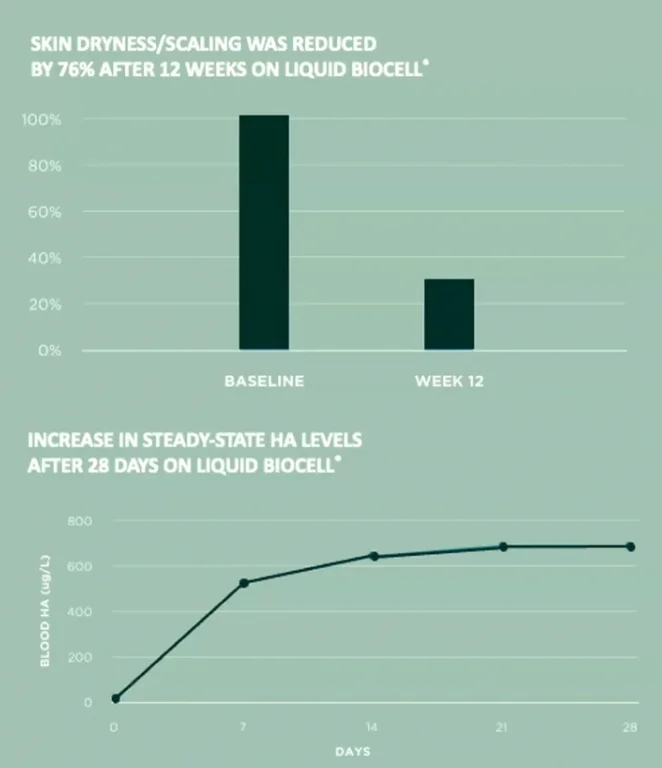
Daily supplementation with 1 g of BioCell Collagen over 12 weeks led to significant improvements in skin condition:
Reduction in skin dryness and scaling: 76% decrease (P = 0.002)
Reduction in global lines and wrinkles: 13.2% decrease (P = 0.028)
These changes were assessed using visual and tactile scoring. Additionally, after just 6 weeks of supplementation, participants showed significant increases in:
Hemoglobin content in the skin: 17.7% increase (P = 0.018)
Collagen content in the dermis: 6.3% increase (P = 0.002)
The study indicates that by improving microcirculation, BioCell delivers more oxygen, nutrients, and growth factors to skin cells while removing waste. This supports healthier dermis, boosts collagen, enhances hydration, and visibly reduces wrinkles for a more youthful appearance
Reference:
Stephen R Schwartz et al. Ingestion of BioCell Collagen(®), a novel hydrolyzed chicken sternal cartilage extract; enhanced blood microcirculation
Cite: https://pmc.ncbi.nlm.nih.gov/articles/PMC3426261/
Cite: https://pubmed.ncbi.nlm.nih.gov/22956862/

Reduced Skin Aging.
The Impact of BioCell Collagen on Skin Aging: A Randomized, Double-Blind, Placebo-Controlled Clinical Trial (P06-122-19)
Summary:
This study aimed to evaluate the effects of BioCell Collagen supplementation on skin aging and overall skin health, as well as potential benefits for joints, teeth, nails, and hair. The primary objective was to determine whether BioCell Collagen could reduce visible signs of aging and improve skin quality.
Method:
A 12-week, randomized, double-blind, placebo-controlled trial was conducted with 128 female participants aged 39–59 years (mean age 50.57 ± 5.55). Participants were randomly assigned to receive either the BioCell Collagen supplement or a placebo. The intervention consisted of twice-daily oral administration of 500 mg of a naturally occurring matrix of type-II collagen peptides, hyaluronic acid, and chondroitin sulfate derived from chicken sternal cartilage.
Primary outcome measures included trans-epidermal water loss, skin viscoelasticity, hydration, collagen content, chromophore (melanin) levels, hemoglobin concentration, and photographic analysis. Expert visual grading assessed facial lines and wrinkles, crow’s feet, skin texture, smoothness, and overall skin tone. Secondary outcomes included product tolerance, incidence of adverse events, presence of erythema and dryness, and participants’ perception of the supplement’s value.
Results:
BioCell Collagen supplementation led to statistically significant improvements in several measures of skin health:
Reduction in facial lines and wrinkles
Reduction in crow’s feet lines and wrinkles
Increased skin elasticity
Increased cutaneous collagen content
Improvement in indicators of youthful skin appearance and wrinkle width
Decreased skin dryness and erythema compared to placebo
The findings indicate that supplementation with this chicken sternal cartilage extract supports the accumulation of type-I and type-III collagen in the skin, enhancing elasticity and reducing wrinkle formation in women aged 39–59 years.
Reference:
Schauss, A. The Effects of Skin Aging Associated with the Use of BioCell Collagen: A Randomized, Double-blind, Placebo-controlled Clinical Trial. Link
https://academic.oup.com/cdn/article/3/Supplement_1/nzz031.P06-122-19/5517780?login=true
Antiaging effects.
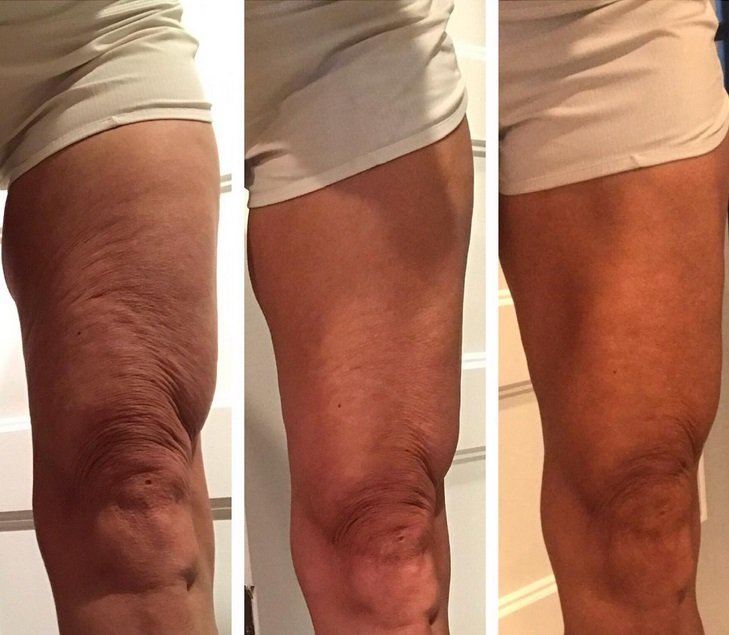
The Effects of Skin Aging Associated with the Use of BioCell Collagen: A Randomized, Double-blind, Placebo-controlled Clinical Trial
Summary:
This study aimed to evaluate the relationship between BioCell Collagen supplementation and changes in skin aging, as dietary supplements often claim anti-aging benefits but supporting research is limited.
Methods:
A 12-week, randomized, double-blind, placebo-controlled trial was conducted with 128 women aged 39–59 years (mean 50.57 ± 5.55), who were randomly assigned to receive either the supplement or placebo. Participants in the treatment group took 500 mg of a naturally occurring matrix of type-II collagen peptides, hyaluronic acid, and chondroitin sulfate derived from chicken sternal cartilage, twice daily.
Primary outcomes included measurements of trans-epidermal water loss, skin viscoelasticity, hydration, collagen content, chromophore (melanin) and hemoglobin levels, and photographic analysis. Expert visual grading assessed facial lines and wrinkles, crow’s feet, skin texture, smoothness, and overall skin tone. Secondary outcomes included product tolerance, incidence of adverse events, presence of erythema or dryness, and participants’ perceived value of the supplement.
Results:
Supplementation with BioCell Collagen led to significant improvements compared to placebo:
Facial lines and wrinkles: Reduced
Crow’s feet lines and wrinkles: Reduced
Skin elasticity: Increased
Cutaneous collagen content: Increased
Indicators of youthful skin and wrinkle width: Improved
Skin dryness and erythema: Decreased
The supplement was well tolerated, with no reported adverse effects.
The findings indicate that dietary supplementation with this chicken sternal cartilage extract promotes accumulation of type I and III collagen in the skin, enhancing elasticity and reducing wrinkles in women aged 39–59.
Reference:
Schauss, A. The Effects of Skin Aging Associated with the Use of BioCell Collagen: A Randomized, Double-blind, Placebo-controlled Clinical Trial. https://academic.oup.com/cdn/article/3/Supplement_1/nzz031.P06-122-19/5517780

Reduced Photoaging.
Oral administration of novel BioCell Collagen® reduces UVB-induced photoaging
Summary:
Excessive exposure to ultraviolet B (UVB) radiation accelerates skin aging, a process known as photoaging. This clinical study investigated whether oral supplementation with BioCell Collagen could help reduce or potentially reverse the effects of UVB-induced skin damage.
Results:
The study demonstrated that BioCell Collagen supplementation significantly reduced:
Trans-epidermal water loss (improving skin hydration)
Skin inflammation
Wrinkle formation
Additionally, the findings indicated that BioCell Collagen provides protective effects against UVB-induced photoaging, supporting overall skin health and resilience.
Reference:
Phipps, K. R. Oral administration of a novel hydrolyzed chicken sternal cartilage extract (BioCell Collagen) reduces UVB-induced photoaging in mice. Link
https://www.sciencedirect.com/science/article/pii/S1756464620300943
Reduced Facial Wrinkles. Oral Intake of Specific Bioactive Collagen Peptides Reduces Skin Wrinkles and Increases Dermal Matrix Synthesis
Summary:
Dietary supplements can influence skin function and may be effective in managing skin aging. This study evaluated the effects of a specific bioactive collagen peptide (BCP), on wrinkle reduction and stimulation of dermal matrix components including procollagen I, elastin, and fibrillin.
Methods:
In a double-blind, placebo-controlled trial, 114 women aged 45–65 were randomized to receive 2.5 g of BCP or placebo once daily for 8 weeks, with 57 participants in each group. Skin wrinkles were objectively assessed at baseline, after 4 and 8 weeks of supplementation, and again 4 weeks after the final intake to evaluate lasting effects. A subgroup underwent suction blister biopsies to measure levels of procollagen I, elastin, and fibrillin at baseline and after 8 weeks.
Results:
Daily intake of the bioactive collagen peptide resulted in a significant reduction in eye wrinkles and fine lines compared to placebo (p < 0.05), with a 20% improvement observed after 4 and 8 weeks. Notably, these benefits persisted 4 weeks after cessation of supplementation (p < 0.05).
Additionally, after 8 weeks, participants receiving BCP showed significantly higher levels of dermal matrix proteins compared to placebo:
Procollagen type I: 65% increase
Elastin: 18% increase
These findings demonstrate that bioactive collagen peptides can improve skin appearance by reducing wrinkles and enhancing dermal matrix synthesis.
Reference:
Proksch, E. Oral Intake of Specific Bioactive Collagen Peptides Reduces Skin Wrinkles and Increases Dermal Matrix Synthesis.
Benefits of Hyaluronidase found in Liquid BioCell.
An overview of Hyaluronidase properties, applications, and side effects
Summary:
Collagen peptides (CPs) have been shown to provide benefits against skin photoaging, yet their effects on naturally aging (chronologically aged) skin remain less explored. Over recent decades, the impact of aging on skin appearance and function has gained increasing attention. Skin aging is generally categorized into chronological aging and photoaging.
Skin photoaging is caused by prolonged exposure to solar radiation, commonly affecting sun-exposed areas such as the face. Clinical signs include deep wrinkles, dryness, sallowness, and reduced elasticity.
Chronological skin aging occurs naturally over time, affecting skin throughout the body, including facial skin. It is marked by fine wrinkles and loss of skin laxity and is more prevalent than photoaging, particularly among darker-skinned individuals and females.
A youthful appearance is closely linked to self-esteem and social interaction, driving increasing demand for anti-aging interventions that delay or reverse visible signs of skin aging.
Methods:
The study evaluated the effects of bovine bone-derived CPs on chronologically aged skin in 13-month-old female Kunming mice. Mice were administered CPs at doses of 200, 400, and 800 mg/kg body weight/day, or proline at 400 mg/kg/day, for 8 weeks. Assessments included body weight, spleen and thymus indices (SI and TI), degree of skin laxity (DSL), skin composition, histological analysis, and antioxidant activity.
Results:
While CPs or proline did not affect skin moisture or hyaluronic acid content, supplementation significantly improved:
Skin laxity
Collagen fiber repair
Collagen content
Type I to type III collagen ratio
CPs prepared with Alcalase showed superior effects compared to those prepared with collagenase. Additionally, CP intake significantly enhanced antioxidant enzyme activity in the skin.
These findings suggest that oral CPs from bovine bone or proline can improve the laxity and quality of chronologically aged skin, highlighting their potential as functional foods for supporting skin health and combating age-related changes.
Reference:
Jung, H. Hyaluronidase: An overview of its properties, applications, and side effects. https://www.ncbi.nlm.nih.gov/pmc/articles/PMC7398804/
Antiaging. Effect of Orally Administered Collagen Peptides on Skin Aging in Chronologically Aged Mice
Summary:
Collagen peptides (CPs) are known to benefit skin photoaging, but their effects on naturally aging (chronologically aged) skin are less well studied. This study investigated the impact of bovine bone-derived CPs on skin aging in chronologically aged mice.
Methods:
Thirteen-month-old female Kunming mice were administered CPs from bovine bone at doses of 200, 400, and 800 mg/kg body weight/day, or proline at 400 mg/kg/day, over an 8-week period. Researchers measured body weight, spleen index (SI), thymus index (TI), degree of skin laxity (DSL), skin composition, histology, and antioxidant indicators.
Results:
CPs or proline supplementation had no significant effect on skin moisture or hyaluronic acid content but led to significant improvements in:
Skin laxity: Enhanced
Collagen fibers: Repaired
Collagen content: Increased
Type I to type III collagen ratio: Normalized
CPs prepared with Alcalase were more effective than those prepared with collagenase. Additionally, CP intake significantly increased antioxidant enzyme activity in the skin.
These findings suggest that oral supplementation with bovine bone CPs or proline can improve skin laxity by enhancing both the quantity and quality of collagen, supporting their potential use as functional foods to combat age-related skin changes.
Reference:
Song, H. D. Effect of Orally Administered Collagen Peptides from Bovine Bone on Skin Aging in Chronologically Aged Mice. https://www.mdpi.com/2072-6643/9/11/1209/htm
Collagen Structure, Types, and Synthesis: A Biochemical Overview
Summary:
Collagen is a protein composed of amino acids that provides structural support to the extracellular matrix of connective tissues. Its rigidity and resistance to stretching make it an essential component of skin, tendons, bones, and ligaments.
Collagen is classified into multiple types based on the structures they form. Although 28 types have been identified, the most common are types I through IV, with type I accounting for over 90% of the body’s collagen.
Results:
Collagen is made up of amino acids, with a primary sequence of glycine-proline-X or glycine-X-hydroxyproline, where X represents any of the other 17 amino acids, and every third amino acid is glycine. Collagen molecules consist of three chains wound together into a triple helix. The small size of glycine allows this tight configuration, providing strength and resistance to stress.
Collagen synthesis primarily occurs in fibroblasts, specialized cells responsible for producing collagen and other components of the stroma. This synthesis takes place both inside and outside the cell. While different types of collagen may undergo specific post-translational modifications, the basic process of collagen production follows a similar outline for all types.
Reference:
Marlyn, W. Biochemistry, Collagen Synthesis. https://www.ncbi.nlm.nih.gov/books/NBK507709/
Benefits of Hyaluronic found in Liquid BioCell. Hyaluronic Acid as a Component of Natural Polymer Blends for Biomedical Applications: A Review
Summary:
This review examines recent research on blends of hyaluronic acid (HA) with other natural polymers, particularly collagen and chitosan. Hyaluronic acid has gained significant attention in biomedical and cosmetic applications due to its unique properties. In recent years, combining HA with other polymers has been explored for the development of innovative biomaterials.
Collagen, a structural protein, provides essential mechanical support in human and animal tissues. Collagen-based materials are widely used in biomedical applications, including tissue regeneration, artificial skin, bone graft substitutes, dental implants, artificial tendons and blood vessels, corneal implants, nerve and cartilage regeneration, and other tissue engineering applications. Blending collagen with hyaluronic acid has been investigated as a method to modify collagen’s properties and develop new functional biomaterials.
Results:
Hyaluronic acid is extensively studied in the biomedical field, and blending it with other biopolymers offers opportunities for creating new biomaterials. The study of HA blends is ongoing, as many potential polymers and biopolymers remain unexplored. In regenerative medicine, there is a growing need for novel materials for cell-based transplantation, tissue engineering, drug delivery, gene therapy, wound dressings, and cosmetic hydrogels.
Blends of hyaluronic acid with collagen, chitosan, and other biopolymers hold significant promise in bridging the gap between the demand for advanced biomaterials and the supply currently available. However, each newly designed material requires detailed biological evaluation to ensure its efficacy and safety.
Reference:
Sionkowska, A. Hyaluronic Acid as a Component of Natural Polymer Blends for Biomedical Applications: A Review. https://www.ncbi.nlm.nih.gov/pmc/articles/PMC7570474/
Ready to Feel Better and Look Younger?
Take back your mobility, comfort, and youthful appearance with Liquid BioCell Collagen — the clinically proven liquid solution for healthy joints.